Introduction
In 2026, social media is no longer just a place where people share photos and watch videos — it has become one of the most powerful spaces where customers discover brands, compare products, read reviews, and make buying decisions. As organic reach continues to decline across major platforms, businesses that depend only on unpaid content are finding it harder than ever to stay visible.
That is exactly why paid campaigns on Meta’s ecosystem have become a core growth channel for businesses of every size and an increasingly important part of the future of digital marketing. With advertising across Facebook, Instagram, Messenger, and other placements, brands can reach highly targeted audiences with far more precision than traditional media allows.
But what exactly are Meta Ads, how do they work, how much do they cost, and are they still worth investing in in 2026? This guide answers all of those questions in one place. Whether you are a complete beginner or an experienced marketer, this article is designed to give you a clear, practical understanding of Meta’s advertising system without needing to read multiple resources.
What Are Meta Ads?
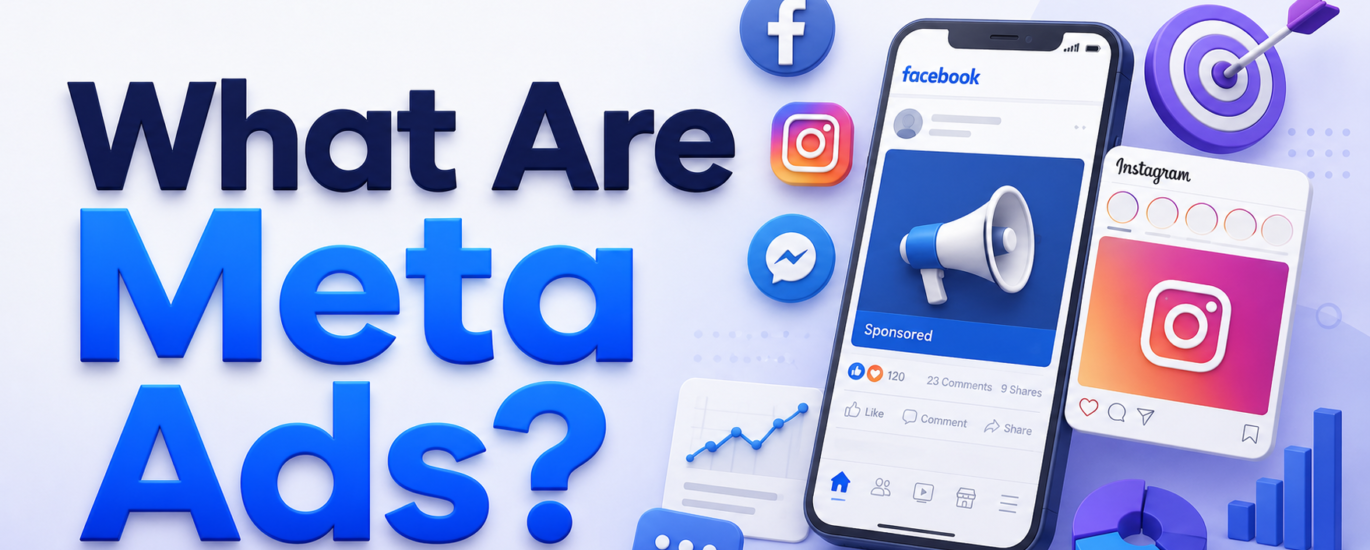
Meta Ads are paid advertisements that businesses run across Meta-owned platforms including Facebook, Instagram, Messenger, and the Audience Network. These campaigns allow brands to promote products, services, offers, and content to highly targeted audiences based on demographics, interests, behaviors, and previous interactions.
Whenever you see a sponsored post while scrolling through Facebook or Instagram, you are most likely looking at one of these paid placements.
Unlike traditional advertising, this system focuses heavily on audience targeting rather than mass exposure. Instead of showing ads to everyone, businesses can show them only to people who are more likely to become customers.
Why Are Businesses Investing More in Meta Ads in 2026?
Consumer behavior has changed dramatically over the past few years. People now spend more time discovering products on social media than on traditional search engines.
Businesses are increasing their investment in Meta’s ad platform because it offers:
- Precise audience targeting
- Lower entry costs than traditional advertising
- Access to billions of users
- Detailed campaign analytics
- Scalable advertising opportunities
- Faster testing and optimization
For many businesses, social media advertising has become one of the highest ROI marketing channels available within a broader digital marketing strategy.
Which Platforms Are Included in Meta Ads?
Meta’s advertising ecosystem is not limited to Facebook.
The network includes:
Ideal for broad audience targeting and lead generation campaigns.
Best suited for visual brands, ecommerce stores, and lifestyle businesses.
Messenger
Useful for direct conversations, support, and lead generation.
Audience Network
Allows advertisers to display ads on external apps and websites.
Together, these placements create one of the largest advertising networks in the world.
How Do Meta Ads Work?
These campaigns work using a combination of machine learning, audience targeting, and real-time auctions.
Businesses create campaigns by selecting:
- Marketing objectives
- Target audiences
- Budgets
- Ad creatives
- Placements
Meta’s algorithm then determines which users should see the advertisement based on predicted performance and relevance.
How Does the Meta Ad Auction System Work?
Many beginners assume that the advertiser with the biggest budget always wins.
That is not how the system works.
The platform evaluates three major factors:
- Bid amount
- Estimated action rate
- Ad quality and relevance
An advertiser with a lower budget but a highly engaging creative can outperform competitors with larger budgets.
This system encourages businesses to focus on relevance rather than simply spending more money.
What Types of Meta Ads Are Available?
Meta provides several ad formats for different goals.
Image Ads
Simple and effective for promoting products and offers.
Video Ads
Ideal for storytelling and demonstrating products.
Carousel Ads
Allow businesses to showcase multiple products in one advertisement.
Collection Ads
Popular among ecommerce brands because they provide immersive shopping experiences.
Story Ads
Full-screen ads designed for mobile users.
Reels Ads
Perfect for short-form video marketing.
Lead Generation Ads
Designed specifically for collecting customer information.
How Much Do Meta Ads Cost?
There is no fixed cost for running campaigns on Meta.
Advertising costs depend on factors such as:
- Industry competition
- Audience size
- Campaign objective
- Geographic location
- Ad quality
Many small businesses start with budgets between $5 and $20 per day and increase spending as they identify profitable campaigns.
The biggest advantage is flexibility. Businesses can start small and scale when results improve.
How Does Meta Audience Targeting Work?
Audience targeting is one of the biggest reasons businesses use Meta’s ad platform.
Advertisers can target users based on:
- Age
- Gender
- Location
- Language
- Interests
- Purchase behavior
- Device usage
- Website activity
This precision allows businesses to spend advertising budgets more efficiently.
What Are Custom Audiences and Lookalike Audiences?
Custom Audiences
Custom Audiences allow businesses to target people who have already interacted with their brand.
Examples include:
- Website visitors
- Email subscribers
- Previous customers
- Social media followers
Lookalike Audiences
Lookalike Audiences use machine learning to find people who share similar characteristics with existing customers.
These audiences often generate some of the highest-performing campaigns on the platform.
Meta Ads vs Google Ads: Which Is Better?
Both platforms serve different purposes.
Meta advertising is generally stronger for:
- Brand awareness
- Product discovery
- Impulse purchases
- Visual marketing
Google Ads are usually stronger for:
- High-intent searches
- Service businesses
- Immediate buying decisions
Many successful businesses use both platforms together rather than choosing one over the other.
Who Should Use Meta Ads?
This advertising channel works for almost every business type, including:
- Ecommerce stores
- Local businesses
- Agencies
- Coaches and consultants
- Service providers
- SaaS companies
- Educational institutions
- Healthcare providers
If your customers spend time on social media, this platform can likely help your business grow.
For local businesses in particular, combining Meta Ads with SEO and conversion-focused marketing can significantly improve lead generation and customer acquisition. This is why many businesses choose to work with experienced local partners such as ZenithForge, the best digital marketing agency in Siwan to build and manage high-performing advertising campaigns.
What Are the Biggest Benefits of Meta Ads?
Some of the biggest advantages include:
- Massive audience reach
- Advanced targeting capabilities
- Flexible budgets
- Multiple ad formats
- Detailed analytics
- Easy scalability
- Strong retargeting options
These advantages make Meta’s advertising ecosystem one of the most accessible platforms for businesses of all sizes.
Common Meta Ads Mistakes Businesses Make
Many businesses struggle with paid social campaigns because they make avoidable mistakes.
The most common include:
- Targeting audiences that are too broad
- Using poor creatives
- Ignoring mobile users
- Sending traffic to weak landing pages
- Failing to install tracking pixels
- Making decisions too quickly without enough data
- Scaling budgets too aggressively
Avoiding these mistakes can significantly improve campaign performance.
How to Create Your First Meta Ads Campaign
The basic process looks like this:
- Define your objective.
- Choose your target audience.
- Set your budget.
- Create ad creatives.
- Select placements.
- Launch the campaign.
- Monitor performance data.
- Optimize based on results.
Testing and iteration are key to long-term success.
How to Measure Meta Ads Performance
Successful advertisers focus on data rather than assumptions.
Key metrics include:
- Click Through Rate (CTR)
- Cost Per Click (CPC)
- Cost Per Acquisition (CPA)
- Conversion Rate
- Return on Ad Spend (ROAS)
- Frequency
- Cost Per Lead (CPL)
Tracking these metrics helps businesses improve profitability over time.
Are Meta Ads Still Worth It in 2026?
Despite increasing competition and rising advertising costs, Meta’s ad platform remains one of the most effective digital advertising systems available.
Businesses continue investing heavily because it offers:
- Unmatched audience targeting
- Strong ecommerce integrations
- AI-powered campaign optimization
- Scalable growth opportunities
The businesses achieving the best results are not necessarily the ones spending the most money — they are the ones with the best creatives, strongest offers, and most relevant targeting strategies.
Final Thoughts
Meta Ads have evolved far beyond simple social media advertising. They have become a sophisticated marketing ecosystem capable of helping businesses build awareness, generate leads, increase sales, and scale growth.
For beginners, this platform offers one of the easiest ways to enter paid advertising without requiring massive budgets or technical expertise.
As digital marketing becomes increasingly competitive, understanding how Meta’s advertising system works is no longer optional for businesses that want to grow online.
Whether you run a local business, an ecommerce brand, or a service company, learning how to use these campaigns effectively could become one of the most valuable investments you make in your marketing strategy.
If you’re looking to generate leads through Facebook and Instagram advertising, professional social media marketing services can help improve targeting, creatives, and campaign performance.
Frequently Asked Questions
1. Are Meta Ads the same as Facebook Ads?
Facebook Ads are part of Meta’s advertising system, but the broader ecosystem also includes Instagram, Messenger, and Audience Network placements.
2. How much money do I need to start Meta Ads?
Many businesses begin with a budget of $5 to $20 per day and scale gradually.
3. Are Meta Ads good for small businesses?
Yes. Flexible budgets make this platform accessible for businesses of all sizes.
4. Which industries perform best with Meta Ads?
Ecommerce, local services, education, healthcare, fitness, real estate, and professional services often perform very well.
5. Are Meta Ads better than Google Ads?
They serve different purposes. Meta advertising excels at demand generation while Google Ads excels at capturing existing demand.
6. How long does it take for Meta Ads to produce results?
Some campaigns generate results within days, while others require several weeks of optimization.
7. Are Meta Ads still effective in 2026?
Yes. They remain one of the most widely used and effective digital advertising platforms for businesses worldwide.




One thought on “What Are Meta Ads? A Complete Beginner’s Guide for Businesses in 2026”
Comments are closed.